
Real Case: How Proper Glove Selection Prevented a Contamination Incident


Introduction: Why the Right Gloves Matter:
Disposable gloves are one of the simplest and most important pieces of personal protective equipment used in healthcare settings.
But simply wearing gloves is not enough. Choosing the right glove for the task, using the correct size, and changing gloves at the right time can make a major difference in infection control.
A glove that is too large can reduce control and make tasks difficult. A glove that is too small may stretch, tear, or cause discomfort. The wrong material may also provide less suitable protection for a particular task.
This case study looks at a realistic healthcare scenario where reviewing glove selection helped reduce a contamination risk and improve everyday safety practices.
Note: This is an illustrative case study based on common PPE and infection-control situations, rather than a report of a specific named hospital incident.
The Situation: A Small Problem With a Serious Risk:
A busy clinical facility was using disposable gloves across several departments.
The facility had a regular supply of gloves, but staff members were not always using the same glove type for the same type of task.
Some common problems were noticed:
Different glove materials were being used interchangeably
Staff were sometimes choosing gloves based on availability
Glove sizes were not always correct
Gloves were occasionally being worn for longer than appropriate
Staff needed clearer guidance about when gloves should be changed
At first, these appeared to be small operational issues.
However, during a routine review, the infection-control team identified a potential cross-contamination risk.
What Was Causing the Problem?:
The main issue wasn't simply the quality of the gloves.
The bigger problem was glove selection and usage.
Healthcare gloves are designed for different purposes, and the correct choice depends on the task.
For example, a facility may use different gloves for:
Routine examinations
Laboratory work
Cleaning procedures
Surgical procedures
Handling potentially contaminated materials
Using the same glove type for every situation may not provide the most suitable level of protection or performance.
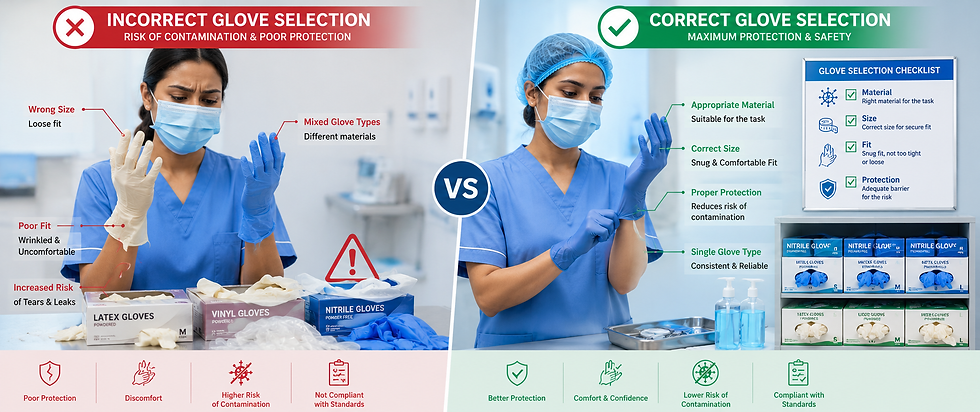
The Solution: Create a Simple Glove Selection System :
The facility introduced a simple glove-selection process.
Instead of allowing staff to choose gloves based only on availability, the team created clear guidelines around four important factors:
1. Material:
Different glove materials have different properties.
Common disposable glove materials include:
Nitrile:Often selected for durability and resistance to many common chemicals and punctures.
Latex:Known for flexibility and tactile sensitivity, but latex allergy considerations must be taken seriously.
Vinyl:Often used for lower-risk, short-duration tasks where appropriate.
The correct material should always be selected according to the task and relevant workplace requirements.
2. Correct Glove Size:
Gloves should fit securely without being excessively tight or loose.
A poor fit can create several problems.
Gloves that are too small may:
Feel uncomfortable
Stretch excessively
Tear more easily
Restrict hand movement
Gloves that are too large may:
Reduce hand control
Slip during work
Make precise tasks more difficult
A simple sizing guide can help staff select the correct fit.
3. Match Gloves to the Task:
The facility also introduced a basic question before selecting gloves:
“What am I going to use these gloves for?”
This helped staff consider:
Level of contamination risk
Duration of the task
Required dexterity
Exposure to fluids or chemicals
Whether sterile gloves are required
This small change made glove selection more intentional.
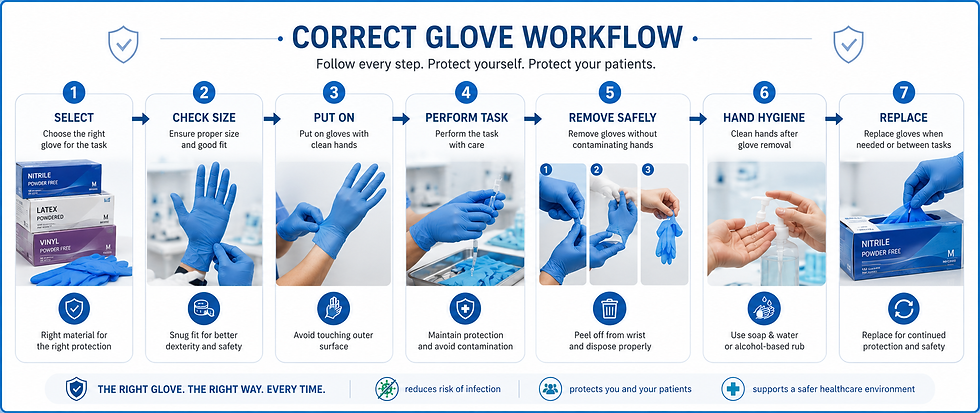
4. Improve Glove-Changing Practices:
Correct glove selection is only one part of contamination prevention.
Staff were also reminded to change gloves when appropriate, including when:
Moving from one task to another
Moving between patients
Gloves become damaged
Gloves become visibly contaminated
A procedure requires a fresh pair
Gloves should never be treated as a replacement for proper hand hygiene.
What Changed After the Review?:
After implementing the new approach, the facility saw improvements in everyday PPE practices.
Key improvements included:
✔ Better glove-size selection
✔ More consistent material selection
✔ Greater awareness of glove-changing requirements
✔ Improved staff confidence
✔ Reduced opportunities for cross-contamination
✔ More organized PPE purchasing
The biggest lesson was that having PPE available is not the same as using PPE correctly.
Why Glove Selection Matters:
The right gloves can support safer working practices, but glove selection should always be part of a broader infection-control programme.
Healthcare facilities should consider:
Protection
Does the glove provide appropriate protection for the task?
Fit
Does it fit securely and comfortably?
Material
Is the material suitable for the intended use?
Dexterity
Can the user perform the required task properly?
Allergy Considerations
Are latex or other material sensitivities relevant?
Compliance
Does the product meet the applicable requirements for its intended use?
Nitrile vs. Latex vs. Vinyl: A Quick Comparison:
Feature | Nitrile | Latex | Vinyl |
Flexibility | High | Very High | Moderate |
Tactile Sensitivity | High | Very High | Moderate |
Puncture Resistance | Generally High | Moderate | Lower |
Latex Allergy Concern | No natural rubber latex | Yes | No natural rubber latex |
Common Use | Healthcare, laboratories, general protection | Clinical and medical applications where appropriate | Lower-risk, short-duration tasks |
Important: Glove selection should be based on the specific task, risk assessment, manufacturer information, and applicable standards—not simply on material name.
5 Questions to Ask Before Choosing Medical Gloves:
Before ordering or using disposable gloves, ask:
1. What task will the gloves be used for?:
Different tasks may require different glove characteristics.
2. What level of protection is needed?:
Consider potential exposure to fluids, contamination, chemicals, or other hazards.
3. What size does the user need?:
Correct sizing improves comfort, control, and performance.
4. Is there a material allergy concern?
Latex alternatives may be appropriate where natural rubber latex is a concern.
5. Are the gloves suitable for the intended application?:
Always check product specifications and applicable requirements.
Common Glove Selection Mistakes:
Even well-equipped facilities can make simple mistakes.
❌ Choosing gloves only by price
The cheapest option may not provide the right performance for every application.
❌ Using one glove type for every task
Different tasks can have different protection and performance requirements.
❌ Ignoring size
Incorrect sizing can affect comfort, control, and glove integrity.
❌ Forgetting allergy considerations
Natural rubber latex can cause allergic reactions in some individuals.
❌ Not checking product information
Always review manufacturer instructions and intended-use information.
A Simple Glove Selection Checklist:
Before placing your next medical glove order, check:
☐ Intended application identified
☐ Appropriate material selected
☐ Correct sizes available
☐ Protection requirements reviewed
☐ Allergy considerations reviewed
☐ Product specifications checked
☐ Storage conditions appropriate
☐ Staff trained on correct glove use
☐ Glove-changing procedures communicated
☐ Stock levels regularly monitored
This simple checklist can help facilities make more consistent PPE decisions.
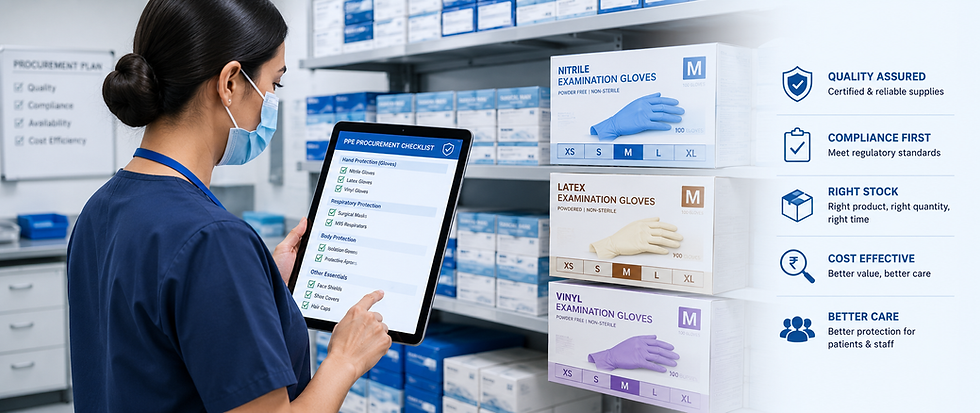
The Bigger Lesson: PPE Is About More Than Purchasing:
A facility can have thousands of gloves in storage and still face infection-control challenges if employees don't know which gloves to use, when to change them, or how to remove them safely.
Effective PPE management combines:
Right Product + Right Size + Right Task + Right Procedure
That combination creates a stronger foundation for workplace safety and infection control.
Conclusion:
The case highlights an important lesson for every healthcare facility: proper glove selection can play an important role in reducing contamination risks.
The solution doesn't always require a complicated system. A clear glove-selection process, proper sizing, appropriate material selection, staff education, and consistent glove-changing practices can make everyday PPE use more effective.
For hospitals, clinics, laboratories, and other healthcare facilities, choosing the right disposable gloves isn't simply a purchasing decision. It's part of creating a safer and more reliable working environment.
🔍 SEO Keywords:
proper medical glove selection
disposable medical gloves
medical glove sizing guide
nitrile vs latex gloves
glove selection for healthcare
infection control gloves
contamination prevention
healthcare PPE
disposable gloves for hospitals
medical glove safety
how to choose the right medical gloves
how proper glove selection prevents contamination
best gloves for infection control
nitrile vs latex medical gloves
medical glove selection guide for hospitals


Comments