
PPE Packaging & Sterility: What Packaging Labels Should Tell You

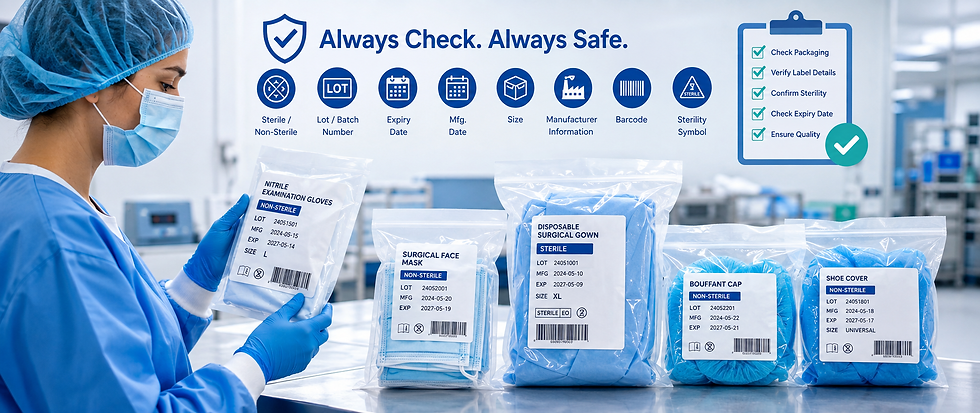
PPE Packaging & Sterility: What Packaging Labels Should Tell You:
When purchasing disposable PPE, the product itself is only part of the decision.
The packaging and label provide important information that helps healthcare facilities understand what the product is, how it should be used, whether it is sterile, and how it should be stored.
This is especially important when purchasing products in bulk. A box may look perfectly normal from the outside, but buyers still need to check the label, packaging condition, dates, and product information before accepting or using the supplies.
Understanding PPE packaging labels can help hospitals, clinics, laboratories, and other healthcare facilities make more informed purchasing decisions.
What Does PPE Packaging Tell You?
A properly labeled PPE package should provide enough information to identify and appropriately handle the product.
Depending on the product and applicable requirements, packaging may include information such as:
Product name
Product type
Size
Quantity
Sterile or non-sterile status
Lot or batch number
Manufacturing date
Expiry date, where applicable
Manufacturer or supplier information
Storage instructions
Intended use
Relevant symbols
Product identification or catalogue/reference number
The exact information required can vary depending on the product, market, and applicable regulations.
1. Check Whether the Product Is Sterile or Non-Sterile:
One of the first things buyers should look for is whether the product is identified as sterile or non-sterile.
This distinction is important because not every disposable medical product needs to be sterile.
For example, some products may be suitable for routine examinations and general protection, while sterile products may be intended for procedures where maintaining sterility is required.
Always check the actual product labeling.
Do not assume that a product is sterile simply because it is individually packaged or looks clean.

2. Look for the Sterility Claim:
If a product is sold as sterile, the packaging should clearly communicate its sterile status according to the applicable labeling requirements.
Depending on the product, you may see:
A word or statement indicating sterility
A recognized sterile symbol
Sterilization-related information
Packaging designed to maintain sterility until opened
The important point is simple:
A sterility claim should be clearly identifiable and supported by appropriate product information.
If the packaging is unclear, damaged, or missing important information, ask the supplier or manufacturer for clarification before using the product.
3. Check the Expiry Date:
Expiry information is particularly important for products that have a defined shelf life.
Before using or accepting stock, check:
Manufacturing Date → Shelf Life → Expiry Date
Avoid using products beyond their stated expiry date.
For bulk buyers, this is especially important because large quantities may remain in storage for months.
Smart purchasing tip:
When buying large quantities, consider the expected rate of use so that products are used within their stated shelf life.
4. Check the Lot or Batch Number:
A lot or batch number helps identify a specific production group.
It can be useful for:
Product traceability
Stock management
Supplier communication
Quality investigations
Product recalls, when applicable
Healthcare facilities should maintain appropriate records of batch or lot information for products where traceability is important.
5. Inspect the Packaging Condition:
Even when the label looks correct, the physical condition of the packaging matters.
Before using a packaged PPE product, check for:
Tears
Holes
Broken seals
Open packaging
Moisture damage
Crushed packaging
Missing labels
Damaged sterile barriers
For products that are supposed to remain sterile until use, compromised packaging can affect the sterility assurance of the product.
6. Check the Product Size:
Size information is particularly important for PPE such as:
Gloves
Gowns
Masks or respirators
Protective footwear
Disposable scrubs
The correct size helps ensure proper fit and comfortable use.
For example, gloves that are too tight can be uncomfortable, while oversized gloves may reduce hand control.
That's why buyers should verify size information before placing large orders.
7. Look for Manufacturer Information:
Good packaging should allow buyers to identify the manufacturer or responsible supplier as applicable.
Look for information such as:
Manufacturer name
Address or contact details
Product reference number
Lot/batch number
Product identification information
This information can help buyers contact the appropriate party if they have questions about the product.
8. Understand Storage Instructions:
PPE packaging may include specific storage recommendations.
These instructions can help protect the product from:
Excessive heat
Moisture
Direct sunlight
Dust
Physical damage
Healthcare facilities should follow the manufacturer's storage instructions rather than assuming every PPE product can be stored in the same conditions.
9. Don't Confuse Packaging With Sterility:
A common mistake is assuming:
"Individually packaged = sterile."
That is not necessarily true.
Individual packaging can provide cleanliness, protection, convenience, or product separation, but it does not automatically mean that the product is sterile.
Always look for the actual sterility claim and relevant product information.
10. Check the Label Before Accepting Bulk Deliveries:
When a large PPE order arrives, don't immediately move every box into storage.
First, perform a basic receiving inspection.
Check:
☐ Product name
☐ Product quantity
☐ Size
☐ Sterile/non-sterile status
☐ Lot or batch number
☐ Expiry date, where applicable
☐ Packaging condition
☐ Manufacturer information
☐ Storage requirements
☐ Order specifications
This simple process can help identify problems early.
How to Verify a Sterility Claim:
If you're unsure whether a PPE product is sterile, follow a simple verification process.
Step 1 — Read the Packaging:
Look for a clear sterile designation or applicable symbol.
Step 2 — Check Product Information:
Review the manufacturer's product documentation and intended use.
Step 3 — Inspect the Packaging:
Make sure the sterile barrier, where applicable, is intact and undamaged.
Step 4 — Check the Lot and Expiry Information:
Confirm that the product is within its stated shelf life and can be traced to the relevant
batch.
Step 5 — Ask the Supplier:
If anything is unclear, contact the supplier or manufacturer before using the product.
Common PPE Packaging Mistakes Buyers Make:
❌ Assuming Every Medical Product Is Sterile:
Different products have different intended uses and sterility requirements.
❌ Ignoring Damaged Packaging:
A damaged package should be evaluated before the product is used, especially where sterile packaging is involved.
❌ Not Checking Expiry Dates:
This can become a problem when purchasing large quantities.
❌ Buying Without Checking Product Specifications:
The cheapest product may not be the right product for the intended application.
❌ Throwing Away Batch Information:
Lot and batch information can be valuable for traceability.
❌ Storing Products Without Reading Instructions:
Improper storage can affect product condition and shelf life.
PPE Packaging Checklist for Buyers:
Before purchasing or receiving disposable PPE, use this quick checklist:
Check | What to Look For |
Product | Correct product and intended use |
Sterility | Clearly identified sterile/non-sterile status |
Size | Correct size for users |
Expiry | Within stated shelf life |
Batch | Lot/batch number available where applicable |
Packaging | Sealed and undamaged |
Manufacturer | Identifiable manufacturer/supplier |
Storage | Appropriate storage instructions |
Quantity | Matches purchase order |
Documentation | Relevant product information available |
Why Packaging Information Matters for Healthcare Facilities:
PPE packaging is not just about presentation.
Clear labeling supports:
Identification → Traceability → Storage → Correct Use → Safer Purchasing
For hospitals and clinics that purchase thousands of PPE items, having a consistent receiving and inspection process can make inventory management much easier.
It also helps purchasing teams identify potential issues before products are distributed to clinical departments.
Conclusion:
PPE packaging provides important information that buyers should not overlook.
Before purchasing or using disposable medical supplies, check the product identity, sterile or non-sterile status, packaging condition, lot or batch information, expiry date where applicable, size, manufacturer details, and storage instructions.
Most importantly, never assume that a product is sterile simply because it is individually packaged.
A few minutes spent checking the label can help healthcare facilities make better purchasing decisions, maintain proper inventory records, and ensure that PPE is used for its intended purpose.
When it comes to medical PPE, the label is part of the product information—not something to ignore.
🔍 SEO Keywords:
PPE packaging labels
sterile PPE packaging
medical PPE labels
disposable PPE packaging
sterile medical supplies
PPE sterility information
medical packaging labels
PPE expiry date
PPE batch number
medical product packaging
how to check if PPE is sterile
what information should be on PPE packaging
how to verify sterile medical supplies
how to read medical PPE packaging labels
what to check before buying disposable PPE
sterile vs non sterile PPE packaging


Comments