
How to Create a Hospital PPE Inventory Plan That Reduces Stockouts

Updated: Jul 28
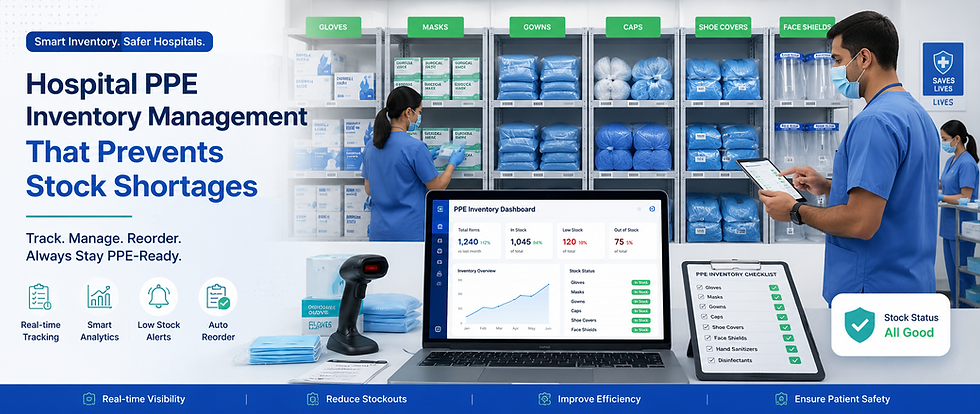
1. Introduction:
Running out of personal protective equipment (PPE) can seriously affect patient care and staff safety.
Hospitals rely on a continuous supply of disposable gloves, masks, gowns, face shields, and other PPE every day. Without a proper inventory system, facilities may experience shortages, delayed treatments, emergency purchases, and increased costs.
A well-planned PPE inventory system helps hospitals stay prepared while reducing waste and improving operational efficiency.
In this guide, we'll explain how to create a simple and effective hospital PPE inventory plan that minimizes stockouts.

2. What Is a PPE Inventory Plan?:
A PPE inventory plan is a structured process used to monitor, manage, and replenish protective equipment before supplies run out.
It helps healthcare facilities:
✔ Track inventory
✔ Forecast future demand
✔ Reduce shortages
✔ Improve purchasing decisions
✔ Maintain uninterrupted patient care
A good inventory plan keeps the right products available at the right time.
3. Step 1: List All Essential PPE Items:
Start by creating a complete list of PPE products used in your hospital.
Typical items include:
• Disposable examination gloves
• Surgical masks
• N95 respirators
• Disposable gowns
• Face shields
• Head caps
• Shoe covers
• Protective aprons
Group products by department if necessary, such as emergency, ICU, laboratory, surgery, and outpatient clinics.

4. Step 2: Track Daily Usage:
The next step is understanding how much PPE your hospital uses each day.
Record:
• Gloves used daily
• Masks used daily
• Gowns used daily
• Face shields distributed
• Department-wise usage
Tracking daily consumption makes future planning much more accurate.
5. Step 3: Forecast Future Demand:
Demand changes throughout the year.
Consider:
✔ Seasonal illnesses
✔ Flu outbreaks
✔ Patient growth
✔ New healthcare services
✔ Emergency preparedness
Historical usage data helps estimate future PPE requirements.

6. Step 4: Set Reorder Levels:
Never wait until inventory reaches zero.
Instead, establish a reorder point for each product.
Example
Gloves available: 5,000 pairs
Reorder level: 2,000 pairs
When stock reaches the reorder level, place a new order immediately.
This helps avoid supply interruptions.
7. Step 5: Maintain Safety Stock:
Unexpected events can quickly increase PPE usage.
Maintain additional emergency stock for situations such as:
• Disease outbreaks
• Delivery delays
• Supply chain disruptions
• Emergency admissions
Safety stock acts as a backup during unexpected demand.

8. Step 6: Organize Storage Properly:
Well-organized storage improves inventory accuracy.
Best practices include:
✔ Label shelves clearly
✔ Separate product categories
✔ Follow First Expired, First Out (FEFO)
✔ Store products in clean, dry conditions
✔ Inspect inventory regularly
Good storage also reduces product damage.
9. Step 7: Monitor Inventory Regularly:
Inventory should never be reviewed only when products run out.
Hospitals should:
• Conduct weekly stock checks
• Review monthly reports
• Identify fast-moving items
• Remove expired products
• Update inventory records
Regular monitoring prevents unexpected shortages.

10. Step 8: Build Strong Supplier Relationships:
Reliable suppliers help hospitals maintain consistent PPE availability.
Choose suppliers who offer:
✔ Consistent quality
✔ Fast deliveries
✔ Emergency support
✔ Transparent communication
✔ Flexible bulk ordering
Long-term supplier relationships improve purchasing efficiency.
11. Common Inventory Mistakes:
Many hospitals experience stockouts because they:
❌ Don't monitor inventory regularly
❌ Ignore seasonal demand
❌ Delay reordering
❌ Keep inaccurate stock records
❌ Store products improperly
Avoiding these mistakes helps improve inventory reliability.

12. Simple PPE Inventory Planning Template:
Inventory Item | Daily Usage | Current Stock | Reorder Level | Emergency Stock |
Gloves | 300 pairs | 12,000 | 3,000 | 2,000 |
Surgical Masks | 250 | 10,000 | 2,500 | 2,000 |
N95 Masks | 60 | 2,500 | 600 | 500 |
Disposable Gowns | 120 | 4,000 | 1,000 | 800 |
Face Shields | 30 | 600 | 150 | 100 |

13. Benefits of a Good PPE Inventory Plan:
A well-managed inventory system helps hospitals:
✔ Reduce stock shortages
✔ Lower emergency purchasing costs
✔ Improve patient safety
✔ Protect healthcare workers
✔ Reduce expired inventory
✔ Improve operational efficiency
✔ Support infection-control programs
14. Conclusion:
Creating a hospital PPE inventory plan doesn't need to be complicated.
By tracking daily usage, forecasting demand, setting reorder points, maintaining safety stock, and monitoring inventory regularly, hospitals can reduce stockouts and improve operational efficiency.
A proactive inventory strategy ensures healthcare professionals always have access to the PPE they need—keeping both patients and staff safe while supporting uninterrupted clinical care.
🔍 SEO Keywords:
PPE inventory plan hospital
hospital PPE inventory
PPE stock management
hospital inventory planning
PPE reorder planning
hospital PPE checklist
medical inventory management
healthcare supply chain
PPE stock forecasting
hospital procurement guide
infection control supplies
PPE warehouse management
healthcare inventory system


Comments